When talking about SEO, it is common for one to concentrate on such aspects as keywords, contents, and backlinks. These are indeed essential factors; however, there is an aspect that not only affects your website performance but directly influences the ranking position. This aspect is related to image optimization.
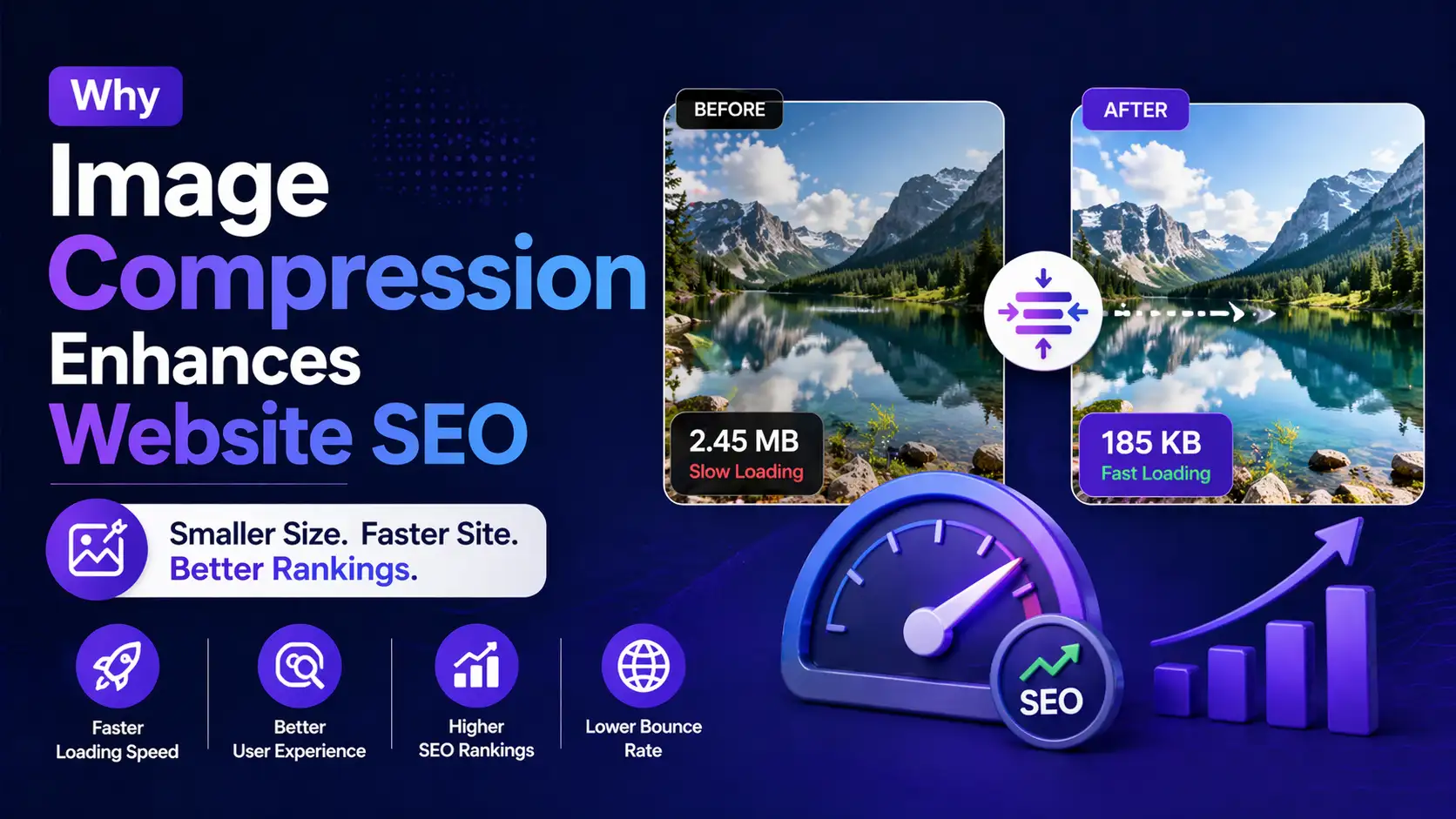
Big images, which have not been optimized, may significantly decrease the website performance; therefore, the website owners should think about compressing their images. This process will make their websites perform better and faster; consequently, the website rankings would be better.
In this blog post, we are going to discuss the importance of image optimization for SEO and the ways to do so (e.g., PNG to WebP).
Definition of Image Compression
Image compression refers to the method of minimizing the size of an image file in such a manner that it does not affect its quality.
The following are the two most common compression techniques:
Lossy Compression
Lossy compression refers to the technique that minimizes the size of image files by deleting some of the data contained in the image. This technique provides better compression compared to lossless compression.
Lossless Compression
It minimizes image file size without any reduction in image quality; however, its efficiency is lower than lossy compression.
If you are looking for compress images for web or reduce image size without losing quality, knowledge of the above compression techniques is vital.
The Effect of Image Compression on SEO
Search engines favor sites providing a quick and seamless experience for users. Here comes the importance of image compression.
Rapid Page Loading Time
Compression results in images loading rapidly, thus increasing the loading time of a web page. Fast loading sites tend to rank higher than others.
Decreased Bounce Rate
Slow-loading sites usually result in users bouncing off. Optimized images will minimize the loading time, thereby retaining visitors.
Enhanced Core Web Vitals
Search engines take into account factors such as loading time and visual stability. Image compression will assist in improving these vital indicators.
Enhanced Mobile User Experience
The majority of users access information from mobile phones. Reduced image size will ensure your website loads efficiently regardless of network strength.
For individuals seeking optimization related to image optimization for SEO or website speed optimization, compressing images is crucial.
Why WebP is a Better Option
PNG and JPG formats have been around for some time now, but more advanced formats such as WebP perform even better.
The WebP format results in smaller files yet produces good-quality images. The format is perfect for sites where speed and quality matter.
You can easily transform your image file into WebP using the Anshu Web Solutions Image Compressor.
Steps for Compression of Your Images
The following steps will be used for compression of your images in an efficient manner.
Step 1: Selecting the Right Tool
Firstly, a proper tool is chosen for the optimization process. You can select PNG to WebP converter for this purpose.
Step 2: Image Uploading
Then, upload the images that you wish to compress on the converter.
Step 3: Compression and Conversion
Compression and conversion of the selected image will be performed using the converter.
Step 4: Image Download
Your images are downloaded and are now ready to replace the previous ones on your website.
Step 5: Testing Website Performance
Test your website performance after this optimization process.
Image Optimization Best Practices
For the best outcomes, consider these guidelines.
Use Suitable Image Size
Scale images based on your website design. Do not upload images that are too large.
Select the Appropriate File Type
Opt for WebP as it offers better compression and efficiency.
Add Alternative Text
Alternative text assists in search engine recognition and accessibility enhancement.
Employ Lazy Loading
Load images when the user scrolls to them. This will ensure faster loading times for pages.
Do Not Compress Too Much
Strive for an optimal level of quality-to-size ratio.
Real Impact on Website Performance
Optimizing images can lead to measurable improvements:
- Faster website loading time
- Better search engine rankings
- Higher user engagement
- Increased conversions
- Improved mobile performance
If you are looking for website speed optimization tools or compress images for SEO, these improvements directly impact your results.
Why You Should Go with Anshu Web Solutions
There are many online tools available, but not all of them can be trusted or are user-friendly.
The Anshu Web Solutions Image Compressor is made for speed and efficiency.
It provides:
- Quick image conversions
- Excellent compression
- User-friendly interface
- Useful for websites and e-commerce sites
- Reliable results that help optimize SEO
If you want to know how to convert PNG to WebP online or need an excellent image compressor for your site, you should try this tool.
Conclusion
Image optimization is not only a technical process. In fact, it is an important component of your SEO strategy.
Higher page load speeds not only provide improved user experience but help achieve better ranking on the search engine results pages as well.
It is possible to make huge improvements in the performance of your website by applying proper techniques and tools.
Contact Anshu Web Solutions today and get started optimizing images for your website!